
Spelt Sourdough with Dill Pickle Brine & Green Olives
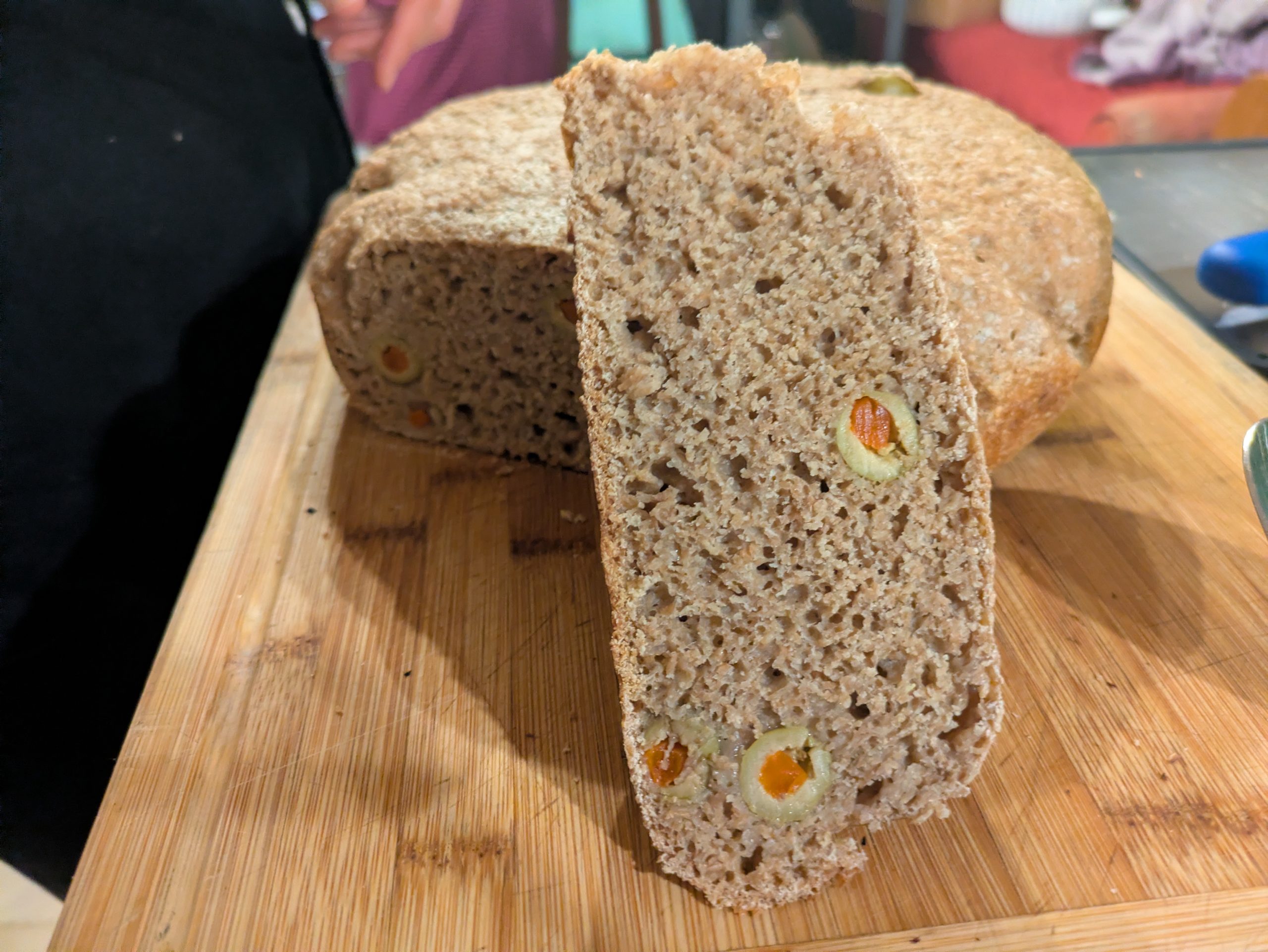
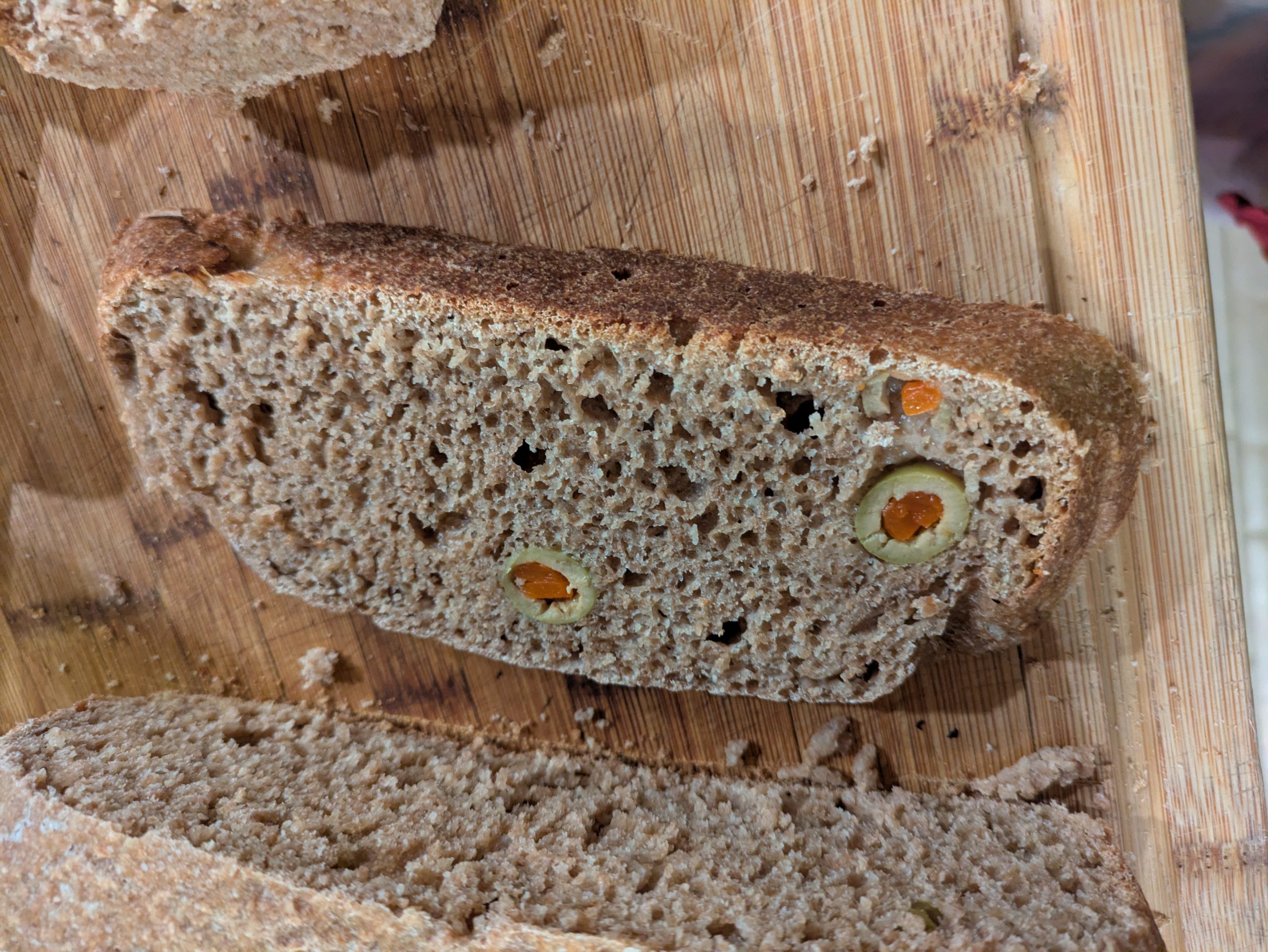
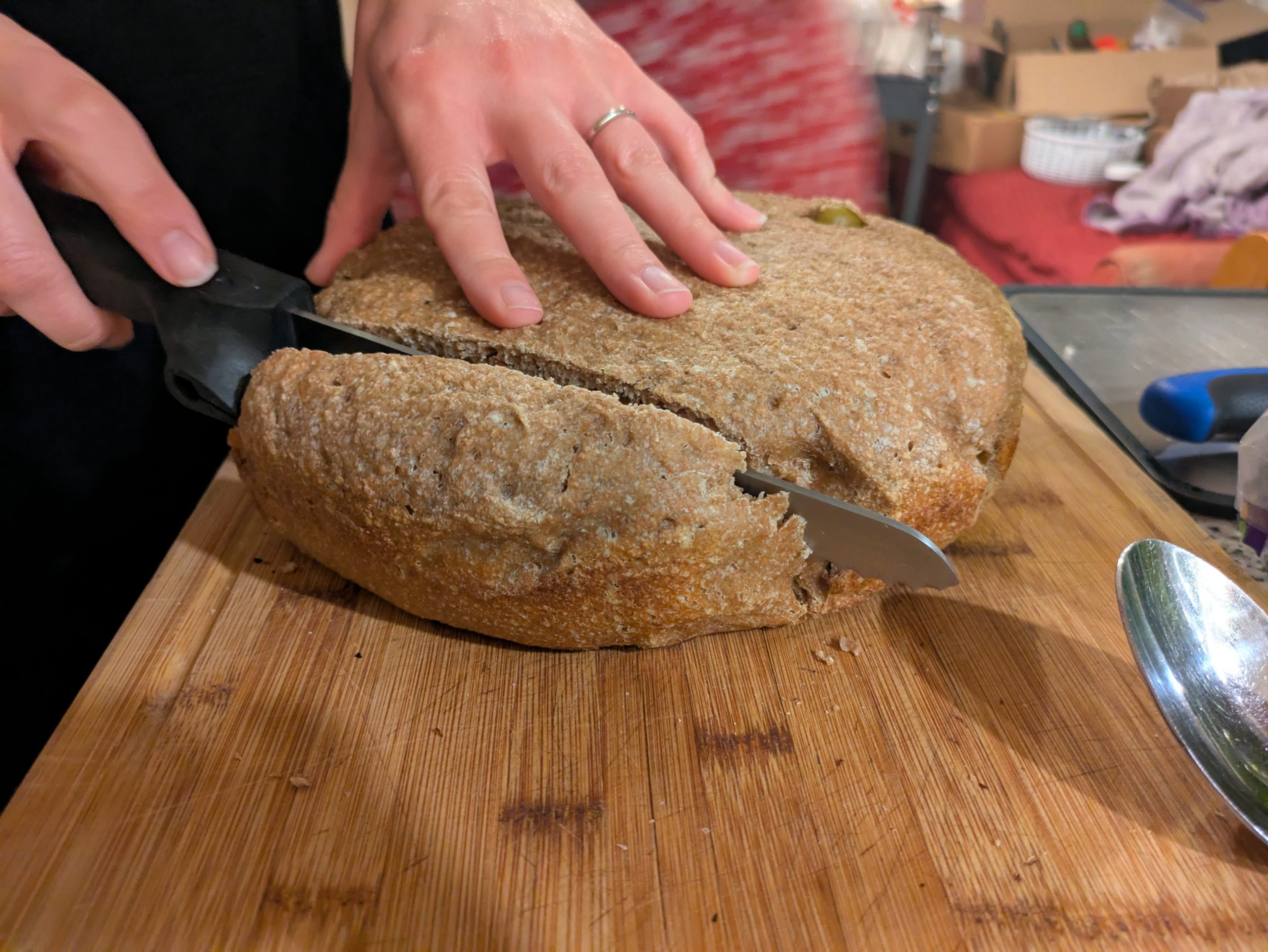
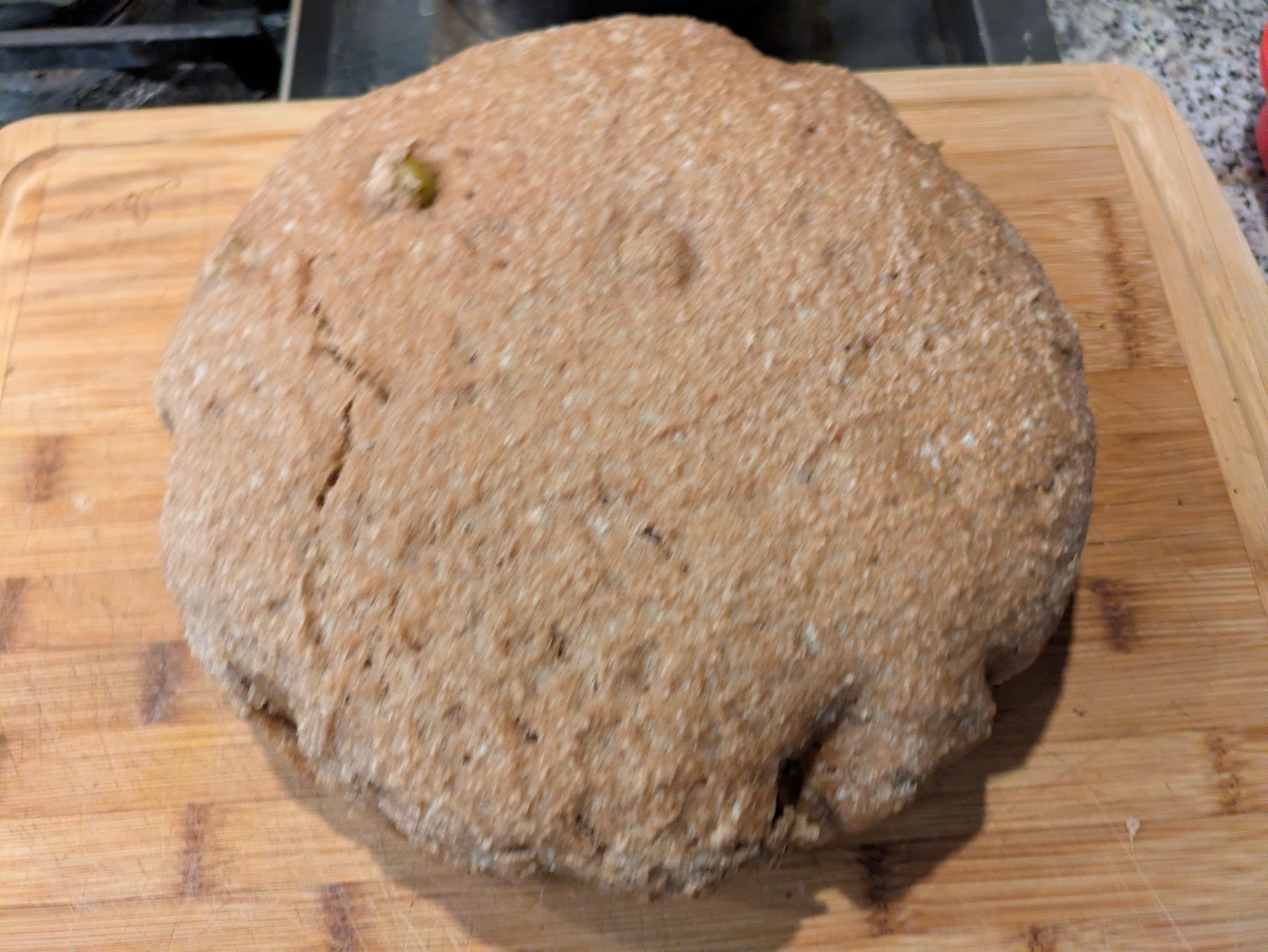
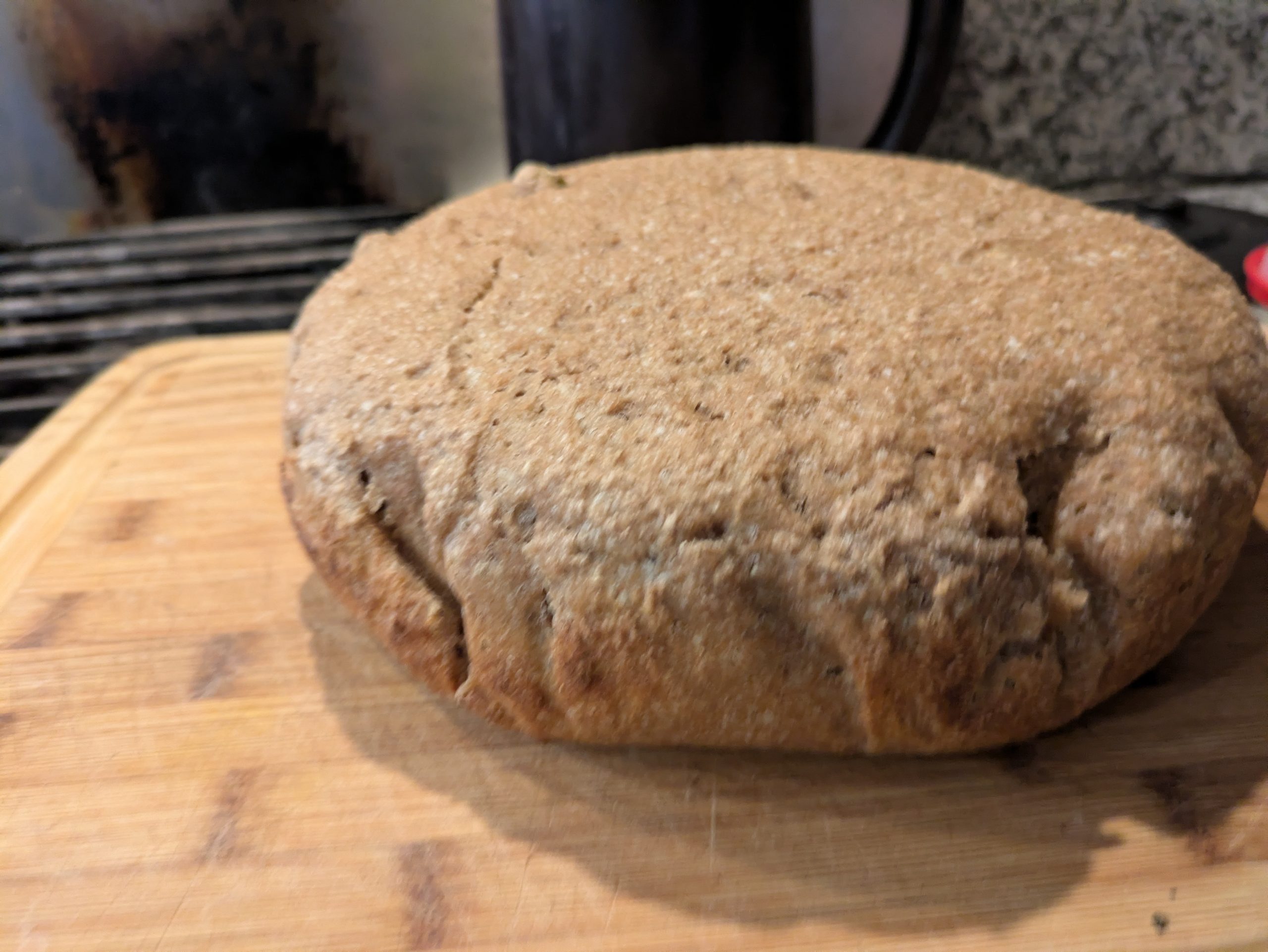
This loaf was so popular that half of it disappeared while dinner was still being prepared. Everyone kept wandering into the kitchen, cutting another slice, and adding butter. The dill pickle flavor was a particular hit!
Categories: Bread
Ingredients:
- 750 g freshly milled whole-grain spelt flour
- 150 g sourdough starter (100% hydration)
- 410 g water
- 100 g dill pickle juice
- 10 g salt
- 150 g pimento-stuffed green olives, drained and patted dry
Directions:
Prepare the flour. Grind 750 g of whole spelt berries into flour using a grain mill.
Mix the shaggy dough. In a large bowl, combine the freshly milled spelt flour, sourdough starter, water, dill pickle juice, and salt. Mix until no dry flour remains. The dough will look rough and shaggy.
Rest the dough. Cover the bowl and let it rest at room temperature for 25–30 minutes to allow the flour to absorb the liquid.
Stretch and fold. With damp hands, gently stretch one side of the dough upward and fold it toward the center. Rotate the bowl and repeat on all four sides. Perform 2–3 sets of stretch-and-folds, approximately 30 minutes apart.
Begin fermentation. Allow the dough to rest at room temperature until it shows the first signs of rising. Freshly milled spelt has delicate gluten, so avoid letting it double in size.
Refrigerate overnight. Cover the bowl and place it in the refrigerator overnight to slow fermentation and develop flavor.
Finish bulk fermentation. The following morning, remove the dough from the refrigerator. Allow it to warm and continue rising until it looks noticeably puffy, with some visible bubbles and approximately a 30–50% increase in volume from when it was first mixed.
Add the olives. Drain and pat dry 150 g of pimento-stuffed green olives. Gently stretch the dough into a thick rectangle on a lightly floured surface. Scatter the olives over the dough, then fold it over itself to distribute them throughout.
Shape the loaf. Gently form the dough into a large round boule, creating enough surface tension to hold its shape without tearing the dough. Place seam-side up in a floured proofing basket or towel-lined bowl.
Final proof. Cover and let rise at room temperature until noticeably puffy, approximately 45–90 minutes, depending on the dough's temperature and fermentation.
Preheat the Dutch oven. Preheat the oven to 450°F with the covered Dutch oven inside.
Bake covered. Carefully transfer the loaf to the hot Dutch oven, using parchment paper if desired. Cover and bake at 450°F for 35 minutes.
Finish uncovered. Remove the lid, reduce the oven temperature to 425°F, and continue baking for approximately 20–25 minutes, until the crust is golden brown and the center reaches 205–210°F.
Cool before slicing. Transfer the bread to a wire rack and allow it to cool for approximately 2 hours before cutting.